4.2
Akhenaten's Disk
In Le soleil de Patiras (2007), Jacques Perconte, equipped with a Sony DCR-PC120 digital camera, relentlessly points at a setting sun. This lasts two minutes and 44 seconds, the time it takes to circle this island in the Gironde estuary by boat. The strategies of destabilizing the apparatus put in place by the artist create a gap between the images obtained and those of “clean” industrial productions. The unstable framing – thanks to the vibrations of the boat’s deck – and the camera’s focusing and exposure systems, which struggle to function properly1, everything in this short film contributes to reaffirming the thickness of the apparatus-based capture of images.
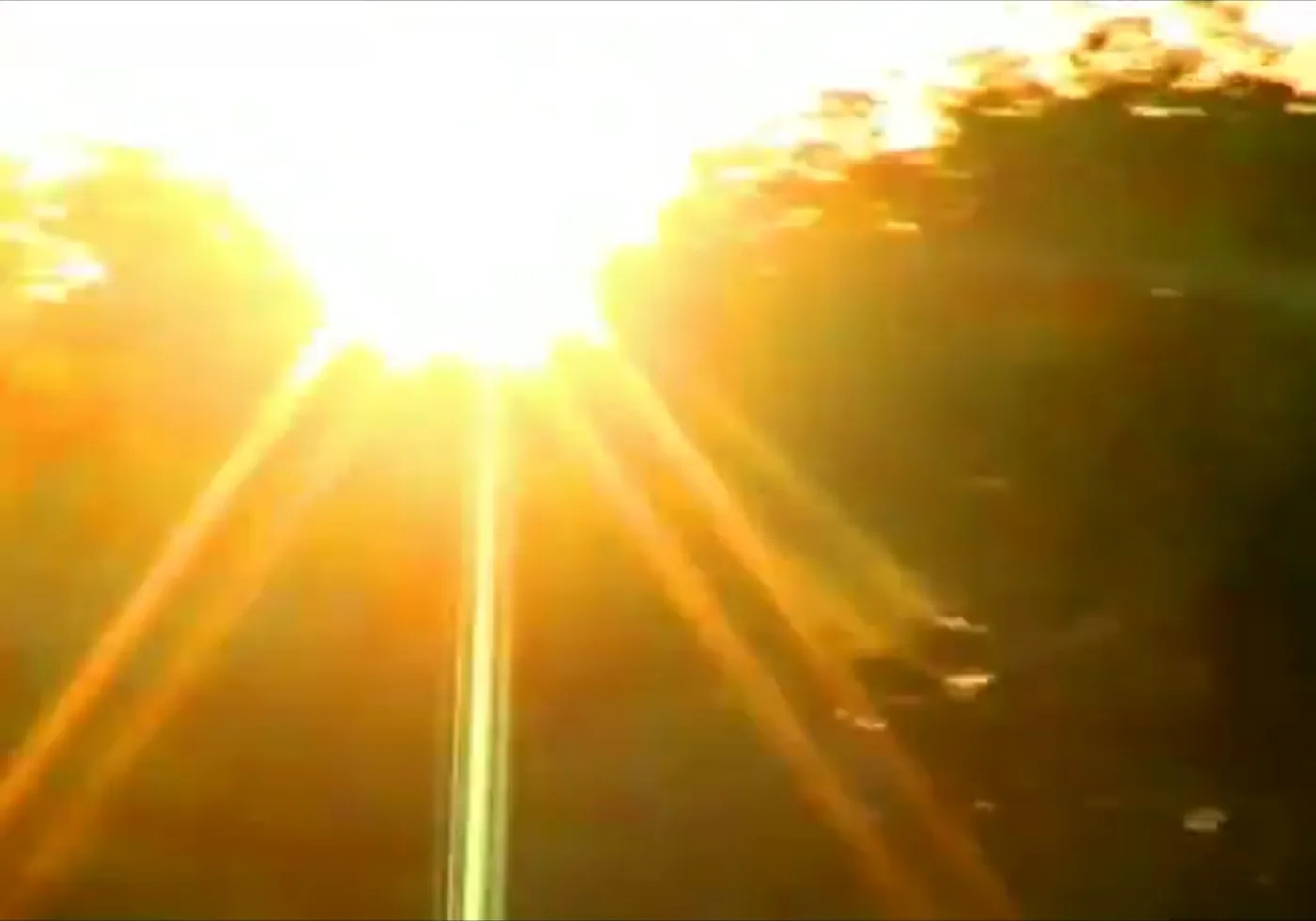
It is no longer a question of a single image, but of a constellation of images – real, possible and impossible – that would have to be summoned in order to do justice to the work. There is the image of the Sun that would have blinded the human eye and the one we see, which burns the digital sensor put to the test by the artist. There is the image that a more suitable or better calibrated camera could have captured, which would have been correct but useless; there is the image lived by Perconte during the capture, and the one he shaped in postproduction…
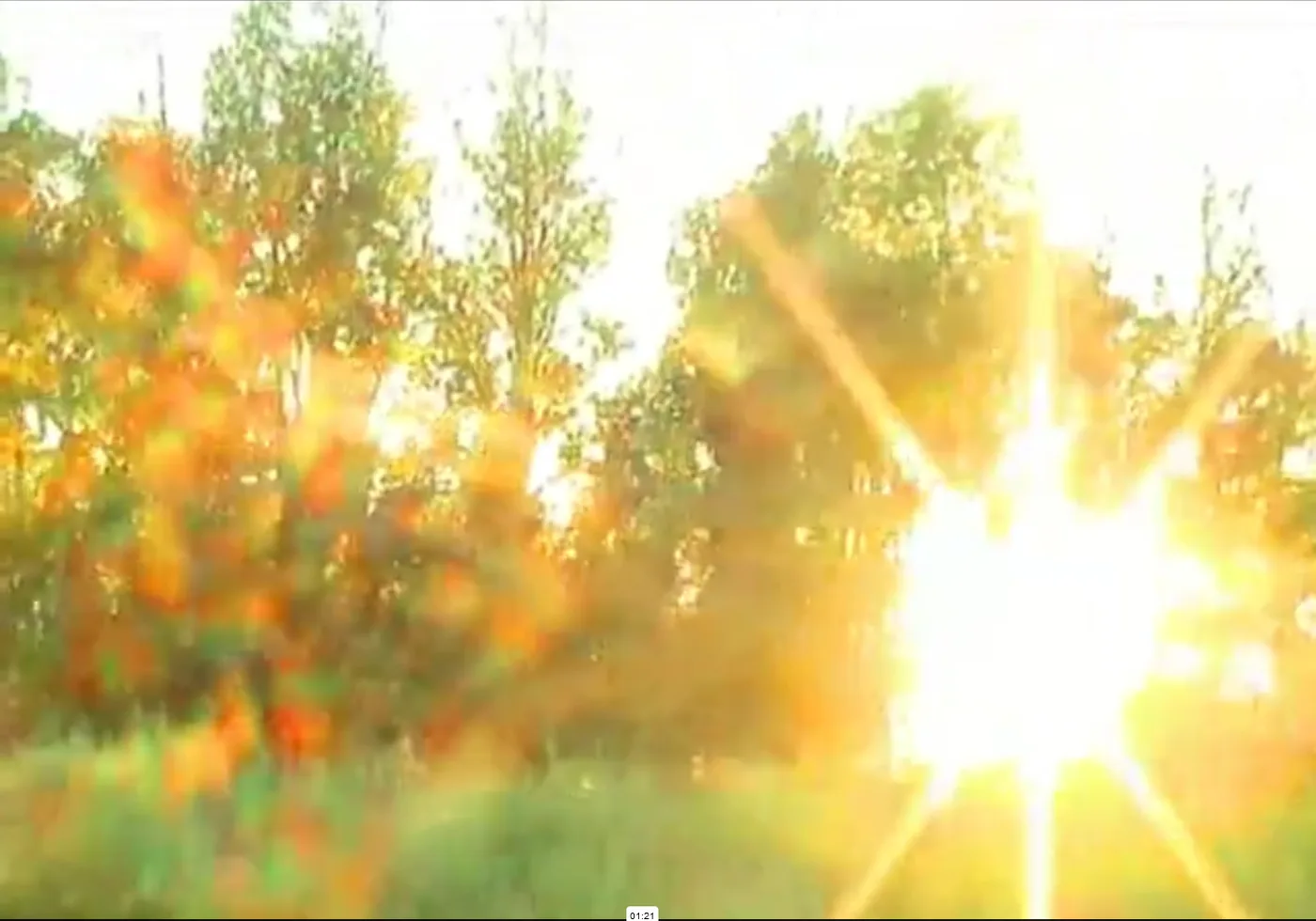
By breaking its transparency, the film reveals the passage of the primitive signal: sunlight, the source of all life on Earth, whose properties explain, according to Bergson, the structure of our eyes2. Mother light, it expresses its irreverence toward earthly power structures, and has done so since – at least – the mannerism of Akhenaten, who opposed the clergy of Amun-Ra in order to worship the solar disk without intermediary. Perconte opposes a resistance to this founding energy, forcing it to pass through the different material layers of the camera. From these frictions emerge simultaneously the presence of the original signal and the diaphanous aspect of the apparatus, which begins to give form to – to in-form – light itself. However, it could never be exclusively a matter of the signal3 for an artist who, since his beginnings, has been searching for something of the order of the body within digital images4, and who declares:
There is something that struck me a lot, something an alchemist said: he said that alchemy was making light enter into matter5.
From then on, we imagine the path of the light signal: transformed into electricity, then into codified electricity, it passes through a matter that affects it in its passage, but, at a key moment in this process, it is matter itself that is informed by the signal. From the signal the trace is born – during capture – a trace that, in turn, will be able to modulate a new signal when the image is rendered. The future form-giving of the signal thus takes place through the present structuring of a matter that will subsist, stable, despite the absence of the signal, once the apparatus is “unplugged.” It is on this image-trace that the artist can work for whole days, like a Flemish Primitive patiently superimposing layer after layer of glaze on a wooden panel6. Thus, Perconte’s work cannot be apprehended without thinking of a certain objecthood of the digital image. And if in Le Soleil de Patiras there is above all a staging of the signal, in a film like Impressions (2012), one feels the body of the image bending, sculpting sensations before us.
Bidan Jacobs’s paragraphs on this film, available on the artist’s website, describe in detail the disruptions orchestrated by Perconte. URL: https://www.jacquesperconte.com/oe?66., accessed April 3, 2025.↩︎
“The increasingly complex eye would be something like the ever deeper imprint of light on a matter which, being organized, possesses a sui generis aptitude for receiving it.”, Henri Bergson, L’évolution créatrice, op. cit., p. 70.↩︎
As might be the case, by contrast, in certain video works in which images circulate without being stored, as with Bill Viola and Peter Campus.↩︎
See in this regard his projects NCORPS1.0 (1997), NCORPS (CORPS NUMÉRIQUES) (1998) and CORPS NUMÉRIQUES (2002), available on the artist’s website.↩︎
Report “Les peintures numériques de Jacques Perconte,” for the program Tracks ARTE, May 2021, video link: https://www.youtube.com/watch?v=8_Xhu9Vx5XM accessed April 5, 2025.↩︎
In the report mentioned, Perconte states “maybe I am a painter,” explaining that he can devote three weeks to working on three seconds of film.↩︎
Cite this pageCórdoba, Pablo-Martín. “Akhenaten's Disk”. In Making Digital Images in the Light of Experimental Cinema — Anthropological and Political Resonances of Algorithms in Contemporary Art, Doctoral thesis in visual arts and photography, Université Paris 8 Vincennes-Saint-Denis, Doctoral School EDESTA (no. 159), research unit AIAC, 2026. https://www.pablomcordoba.com/thesis/akhenaten-s-disk/