1.2.1
The Dual Pictorial / Musical Filiation
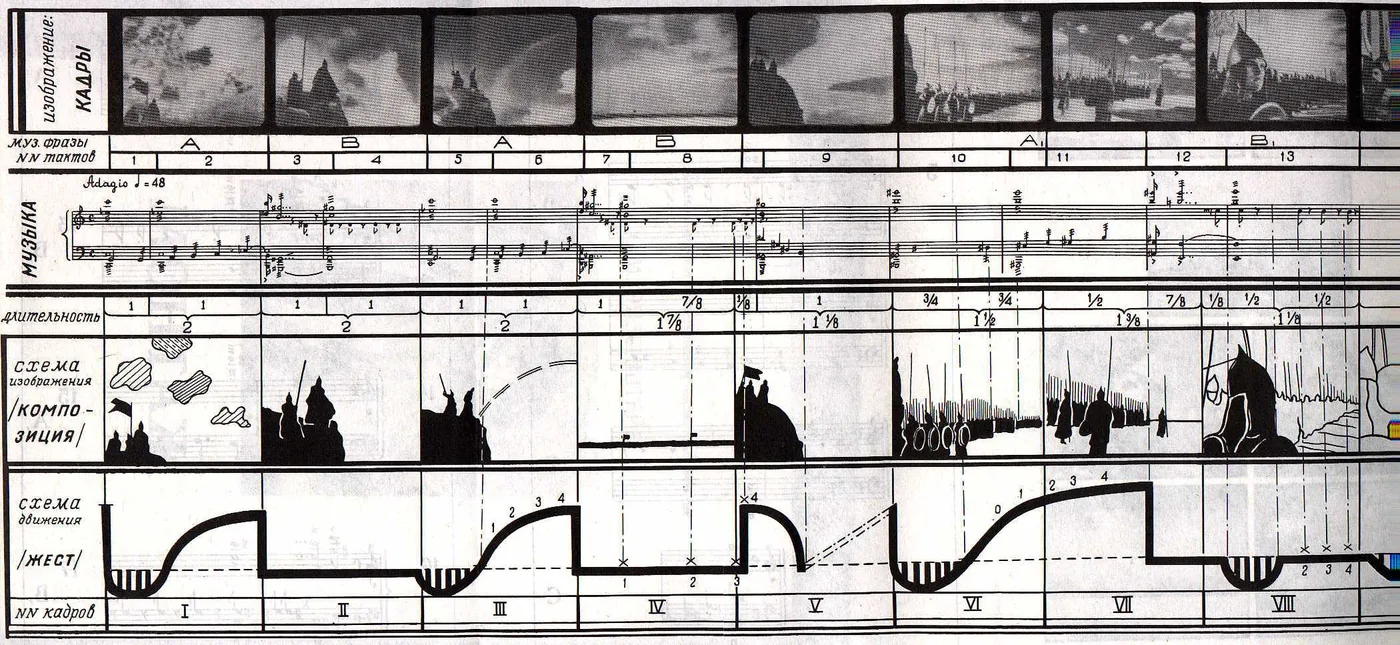
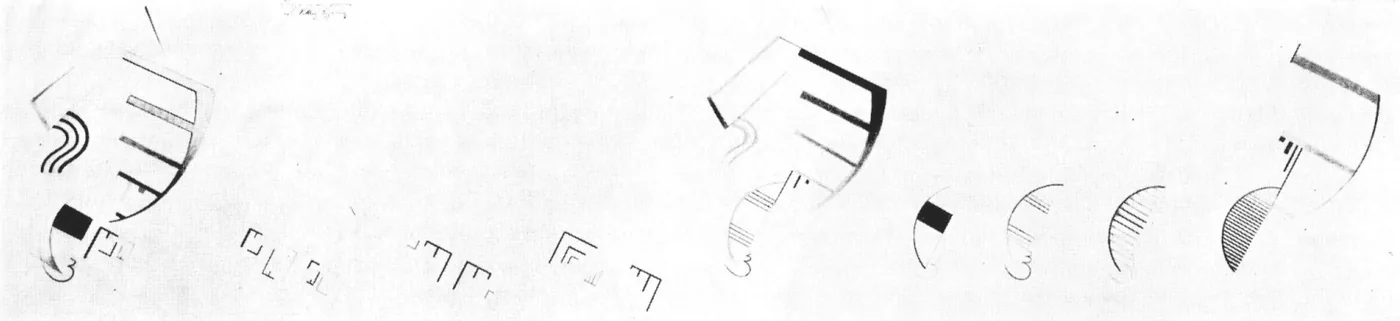
From the simple polyphony of a voice accompanied by a musical instrument to the formalization of counterpoint, the synchronization of distinct elements has been the business of music since time immemorial. Thus, in its youth, cinema was often schematized by drawing on the musical grid, as Eisenstein’s systems of “vertical montage” attest, in which the various elements are stacked within a score where time unfolds horizontally. Before Eisenstein, and perhaps more intensely, Hans Richter and Viking Eggeling were already organizing their moving images in resonance with musical representation.

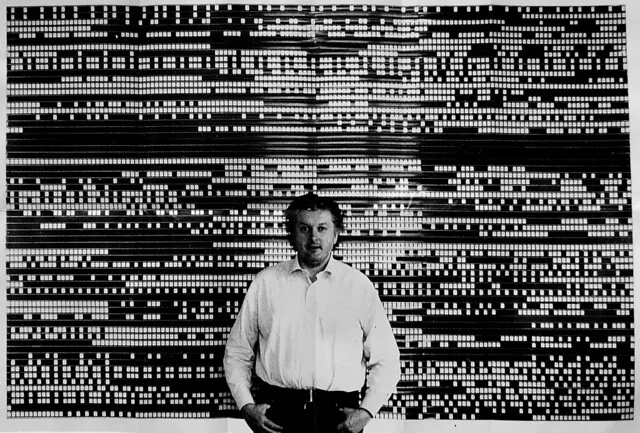
The musical filiation of cinema, which persists to this day, was embodied from the 1960s onward by Peter Kubelka, a musician by training, who, through cinema and in comparison with music, refers to sculpture and architecture: Kubelka postulates that cinema, unlike music, is not movement, since it can be stopped at an instant “t,” where the fixity of the frame is revealed. It is therefore on a discretized structure, whether temporal or spatial, that the search for harmony evoked by Kubelka is articulated:
[…] it’s fantastic, cinema is already rhythmic at its base. I decided to introduce measures in time, which had already existed in music for hundreds of thousands of years: in architecture for several thousand years. Equal elements in time. It was so simple, but for me it was changing the world1!
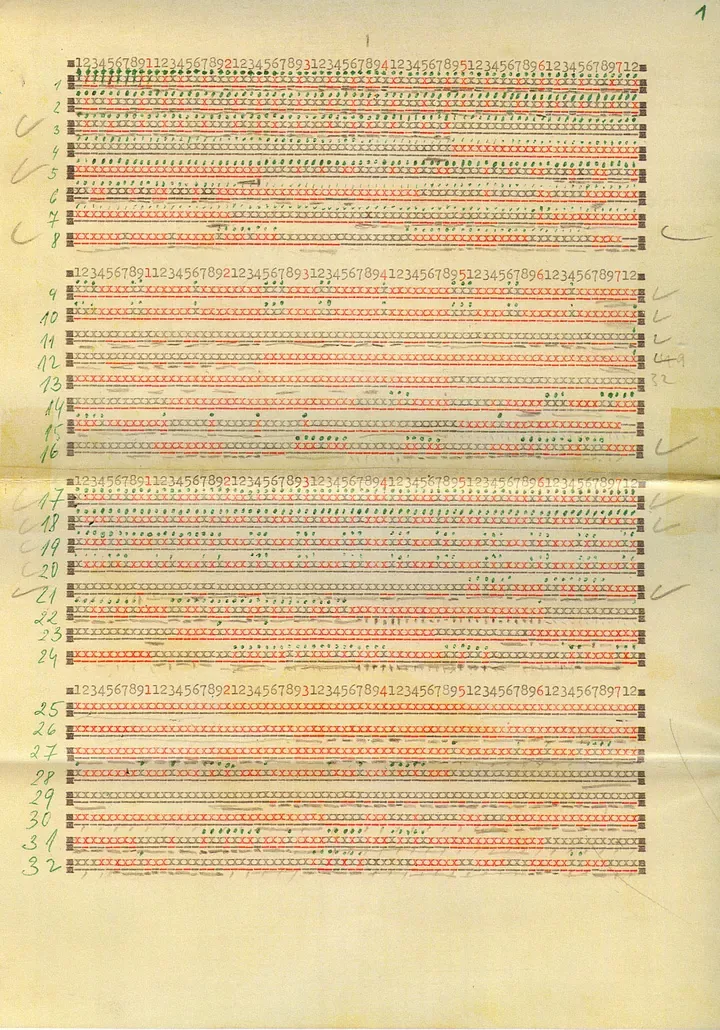
Kubelka seems consistent when he refers to music in his approach, to architecture and sculpture in his reflection, and to painting when he presents his films hung on the wall, while claiming his quest for cinema in its pure state: white and black frames, white noise and silence, in Arnulf Rainer (1960). By synthesizing the elements of cinema to the utmost, Kubelka reaches the visual binary, which interacts with the sonic binary, in a score evoking both the musical grid and the punched cards of the first computers.
With the cinematographic dispositif, the issues of synchronization broadened, since sound and image had to be organized. Avant-garde filmmakers helped make the situation even more complex, for, far from being content with a single visual register, they favored increasingly convoluted montages, superimpositions, flickerings… Their quest aimed to explore the representational possibilities of the cinematographic medium so that it could reflect the complexity of human streams of consciousness, in which images arising from perception intermingle with those of memory and dream, the whole traversed by imagery emanating from the unconscious. At the same time, the modernist quest for the specific essence of cinema as a medium, setting aside the narrative discourse inherited from literature, undoubtedly contributed to a subjectivization of the moving image, which, moving away from the representation of the world, intensified its link with avant-garde pictorial experiments: Cubism, Constructivism, Futurism, abstraction…
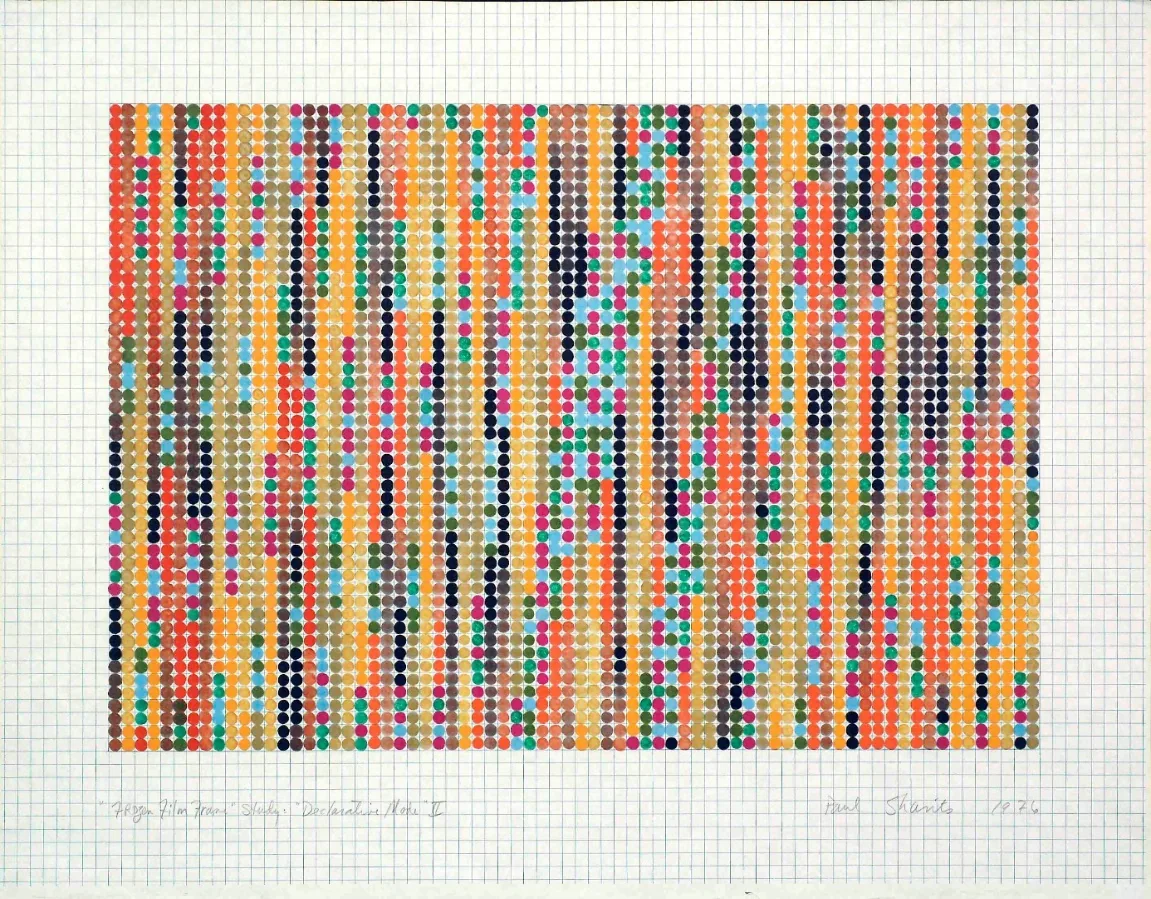
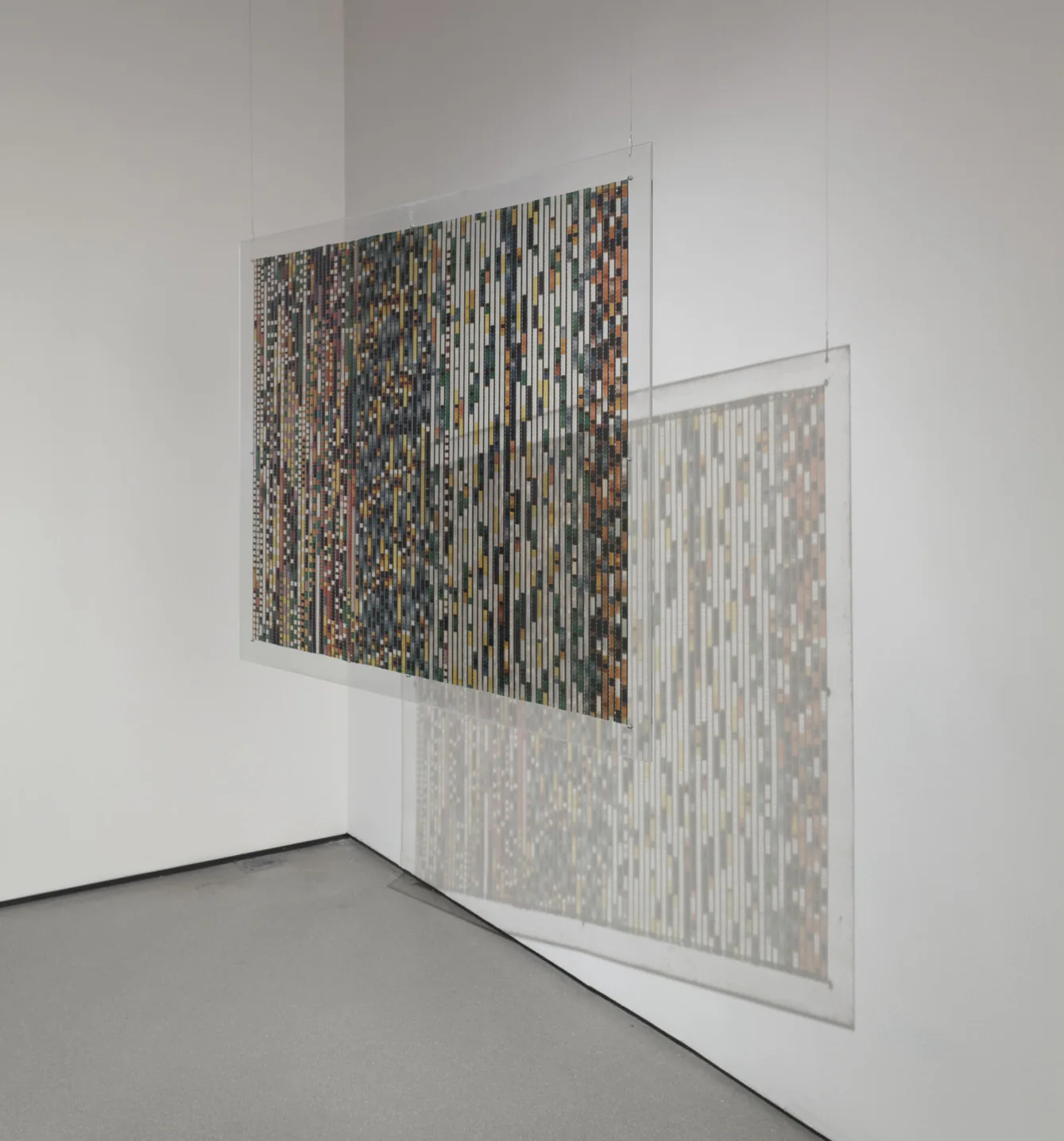
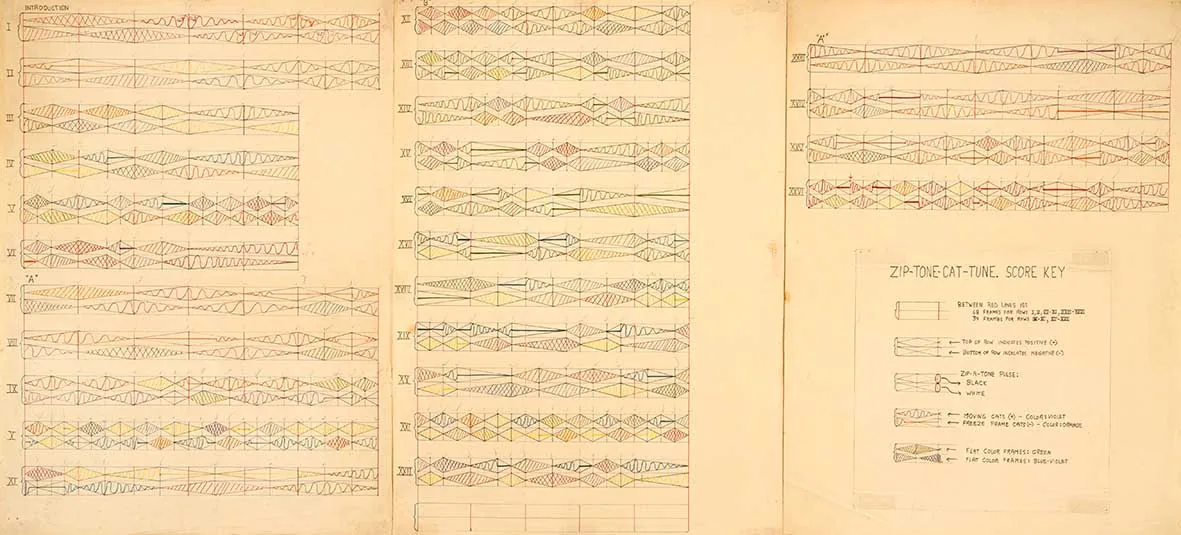
In this context, notations of evident pictorial resonance appear alongside the films, as in the case of the studies for Paul Sharits’s Frozen Film Frames (1971-76), which “can become a film or an installation2.” The film can thus be looked at “in itself,” bypassing the projection dispositif, when the frames are laid out side by side on a plane that has now become pictorial, as if it were a transcoding ahead of its time. This complicity with painting, present in Sharits, should not obscure the musical filiation manifest in his approach. Indeed, the artist says he was inspired by “Beethoven and Mahler for Declarative Mode, Mozart for T,O,U,C,H,I,N,G [and] Bach for N:O:T:H:I:N:G3.” The score (score key) of ZIP-TONE-CAT-TUNE (1972), by the American artist Bill Brand, likewise claims a musical reference, while its colors and forms resonate with certain canvases by Paul Klee.
Thus, through paper notations, experimental cinema materializes its dual filiation: with music, as an art that dares to spatialize its temporality; and with modernist painting, with images that warp and flicker within the frame, in a dynamic that can even mobilize the abstract register. This filiation between experimental cinema and the traditional arts extends — albeit weakened — to the algorithmic plane. Within the computer, the discrete temporal grid proper to music persists: we even speak of execution “steps” when computing or rendering the image. The reference to painting, though partially diluted, is not absent: it can be revealed by the artistic gesture, as we will see with Jodi.org.
Christian Lebrat (dir.), Peter Kubelka. Paris : Paris Expérimental, 1990, p.68.↩︎
Yann Beauvais, ”Künftige filme / films à venir,” in Notation kalkül und form in den künsten, op. cit.↩︎
Yann Beauvais, Paul Sharits: exposition, Bourogne, Espace multimédia Gantner, 13 octobre 2007-2 février 2008. Dijon : les Presses du réel, 2008, p. 26.↩︎
Cite this pageCórdoba, Pablo-Martín. “The Dual Pictorial / Musical Filiation”. In Making Digital Images in the Light of Experimental Cinema — Anthropological and Political Resonances of Algorithms in Contemporary Art, Doctoral thesis in visual arts and photography, Université Paris 8 Vincennes-Saint-Denis, Doctoral School EDESTA (no. 159), research unit AIAC, 2026. https://www.pablomcordoba.com/thesis/the-dual-pictorial-musical-filiation/