2.1.7
The Tortured Computer
In a video barely two minutes long1, edited in jerky synchronization with an electro-trash soundtrack, the sole recording of a performance carried out in 2005, we discover two young artists in their twenties, members of the duo 5VOLTCORE. The dreadlocks of one, the scruffy look of both, do not prevent them from slipping into two lab coats, safety goggles and respirator masks in place. A little further on, on a large table, a computer’s central unit (CPU) awaits them, connected to two old monitors, surrounded by tools usually associated with electrical work or masonry: circular saw, electrodes, cables… A projected screen illuminates the wall behind the table, serving as a stage backdrop and making visible to the audience the images resulting from the actions of the performance. These actions consist in directly manipulating the computer’s internal circuits by means of cables and electrodes, thus carrying out a great détournement of its functioning: an amplified audio signal will be “injected” at the level of the chips of the graphics card. This material swap is a shock for the machine: it receives an analog audio signal where it expected to receive a digital video signal. The resulting images convey the expression of an internal tearing of the machine, not designed to process this diverted flow of electrons: glitches, binary characters, flickering geometric structures, pixelations, everything contributes to a flickering of pixels that seems to gush from the very flesh of the computer. These violent gestures, while generating images, permanently and irreversibly alter the physical structure of the computer, thus signing its “death.” But before reaching its ultimate end, the machine spits out, in the form of visual glitches, everything it might have “known,” like a spy caught red-handed by the enemy in its camp. Fire eventually gets the better of the torn body of the CPU, an outcome anticipated by the artists, who hasten to put out the flames with extinguishers provided for that purpose.
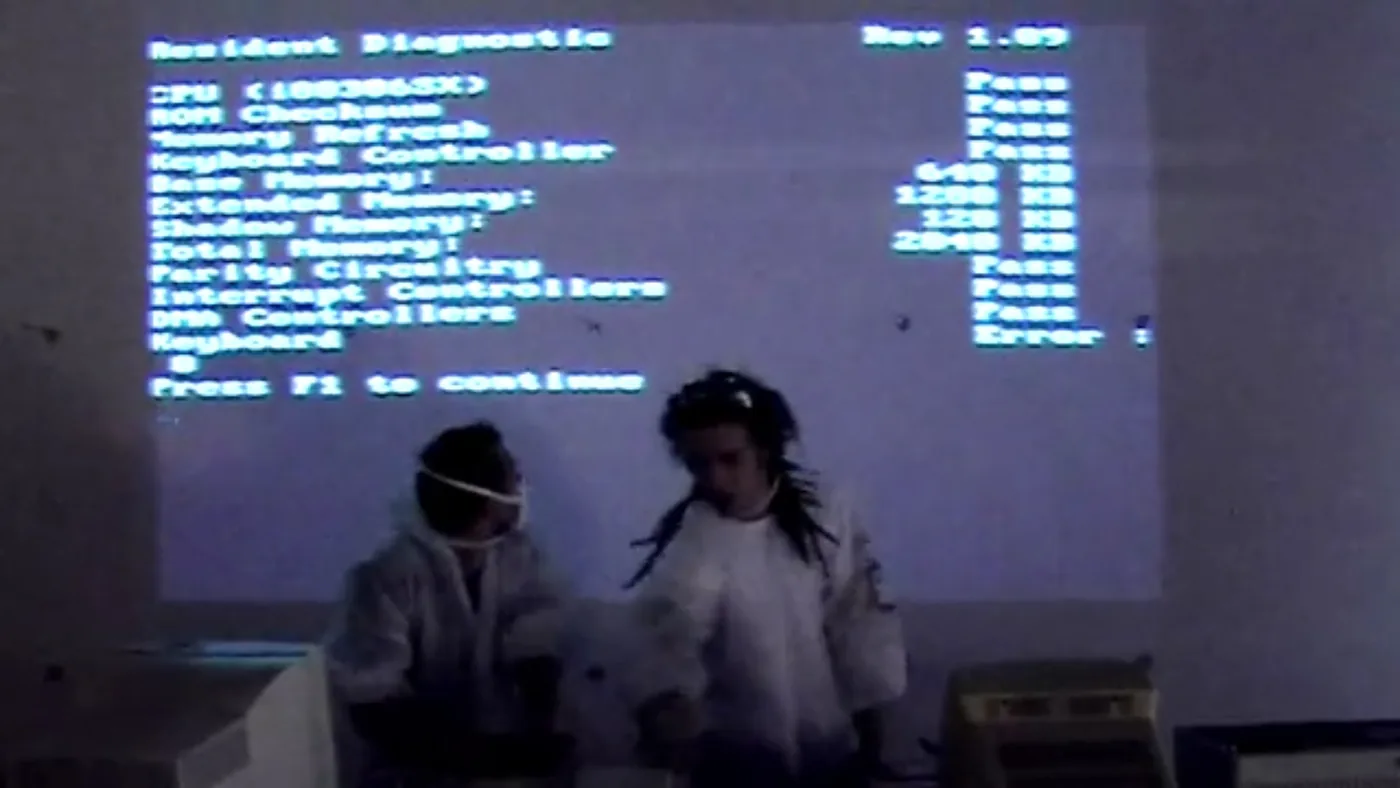
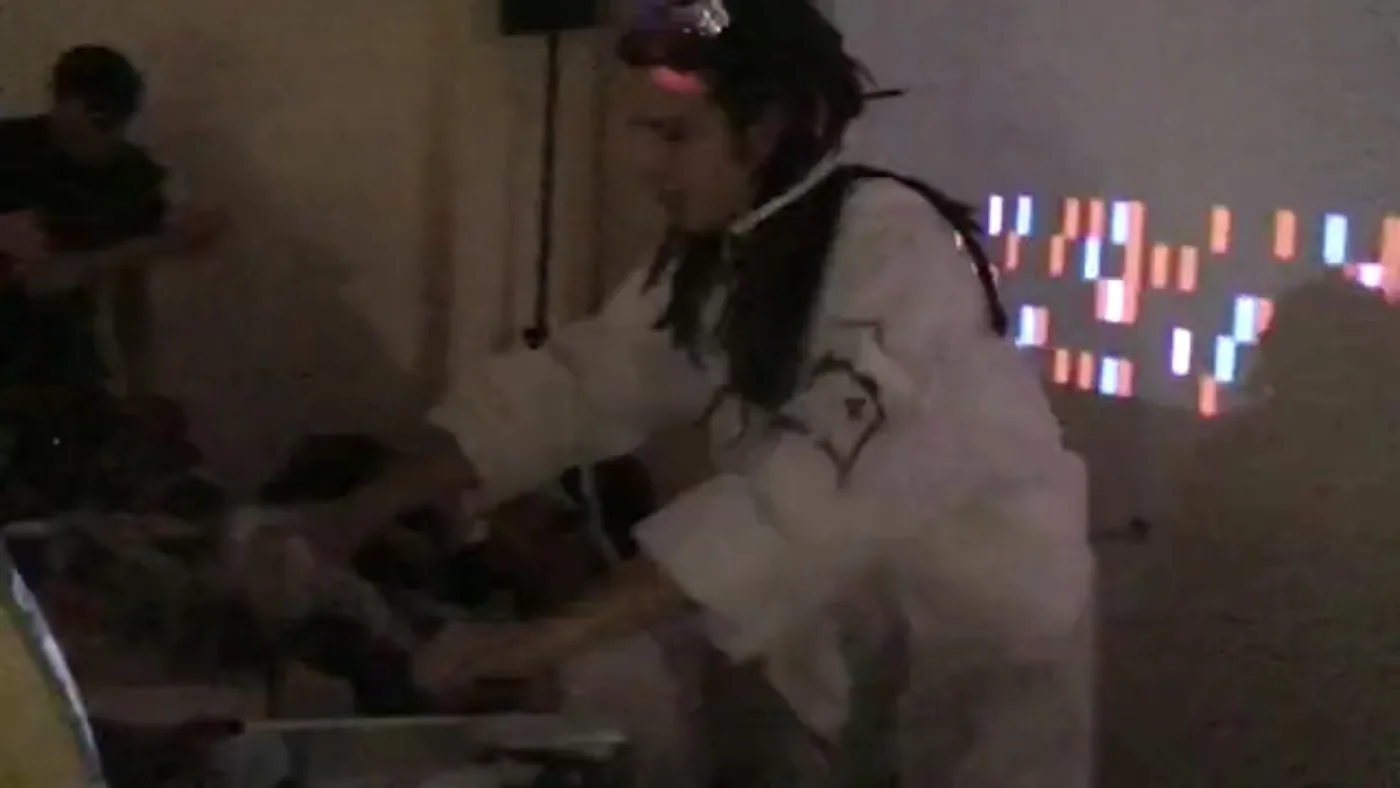
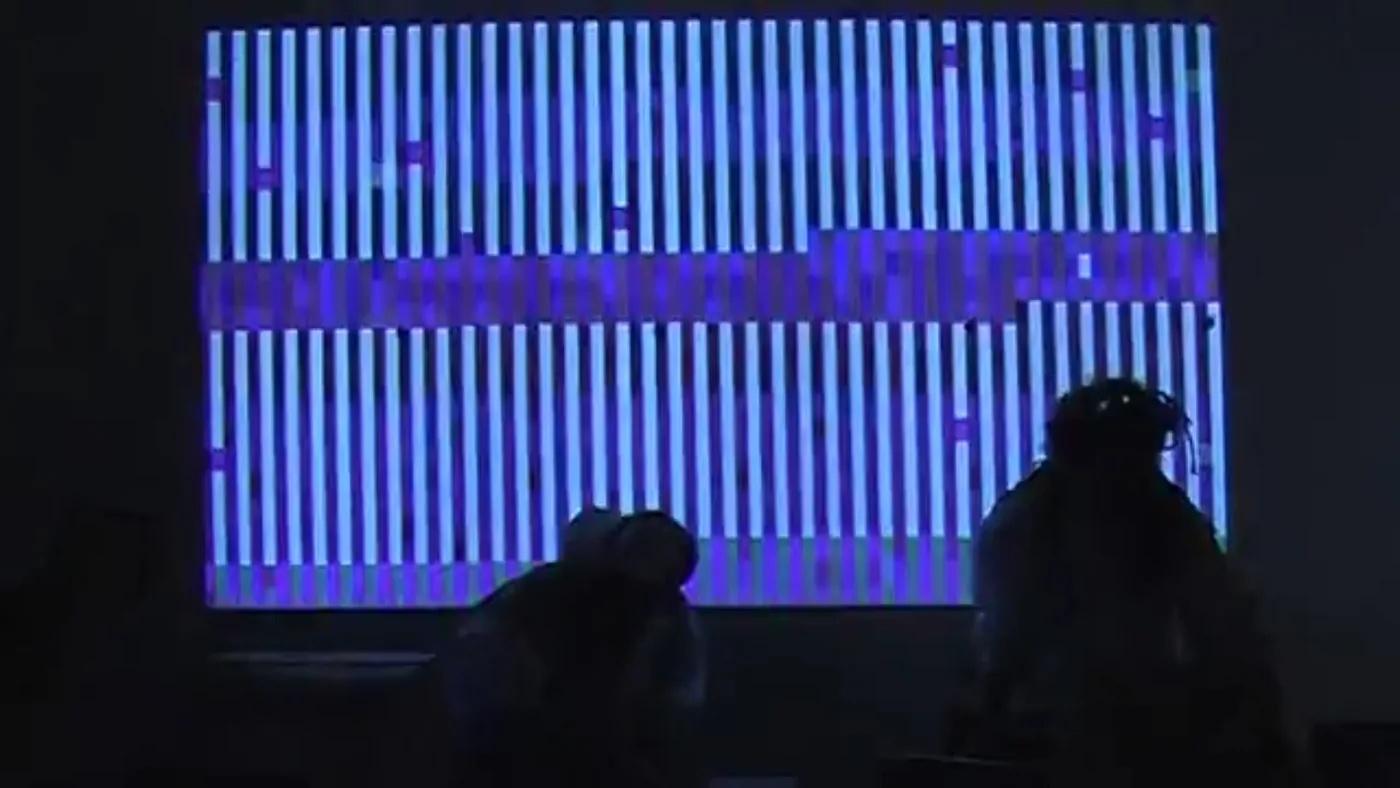
A Truly Manual Manipulation
We have witnessed the torment inflicted on the machine by these torturer artists, through physical gestures – connecting, disconnecting – which, by their effects, recall familiar actions: the machine is “feinted” as in Rosa Menkman’s A Vernacular of File Formats, its components are “disconnected” (and “reconnected”) as on the Jodi.org site, it is “overflowed” like the creature in Takeshi Murata’s Monster Movie… However, 5VOLTCORE’s performance carries out these gestures not through code, but at a resolutely more material level: the computer is not deceived by commands to be interpreted, but directly confronted with the unexpected nature of the electrical signal. Disconnection and reconnection do not affect the logical structure of a website’s data, but the physical connections of the cables, channeling a denatured electrical flow. As for the overflow, it is not limited to the projected image, but results from exceeding the physical capacities of the graphics card, which struggles to interpret this illogical flow. What encompasses all these gestures is indeed the gesture of putting to death. The outwitted computer then becomes a technical tool allowing the artists to produce ephemeral images in a particular modality, one of ultimate irreversibility: the operations progressively damage the apparatus, and the latter, by way of a last breath, offers its final images.
This process is reminiscent of the experiments of experimental filmmakers intervening live on celluloid film, operations during which forms and textures visible in projection emerge from the irreversible degradation of the support, sometimes to the point of its complete destruction. The films/performances of the collective Schmelzdahin are emblematic in this respect, notably Stadt in Flammen (1984), in which a reel, after developing mold, no longer withstands the heat of the projector: we witness the progressive disintegration of the film and of the images it carries, disfigured by multiple textures, fissures, cracks. The comparison with 5VOLTCORE’s performances nonetheless has its limits. On the material level, 5VOLTCORE destroys the very dispositif for rendering the images – the computer’s graphics card – whereas Schmelzdahin destroys the support of the image, namely the film reel. In both cases, however, the production of images is born of the progressive and irreversible destruction of the material means.
The Flesh of the Image
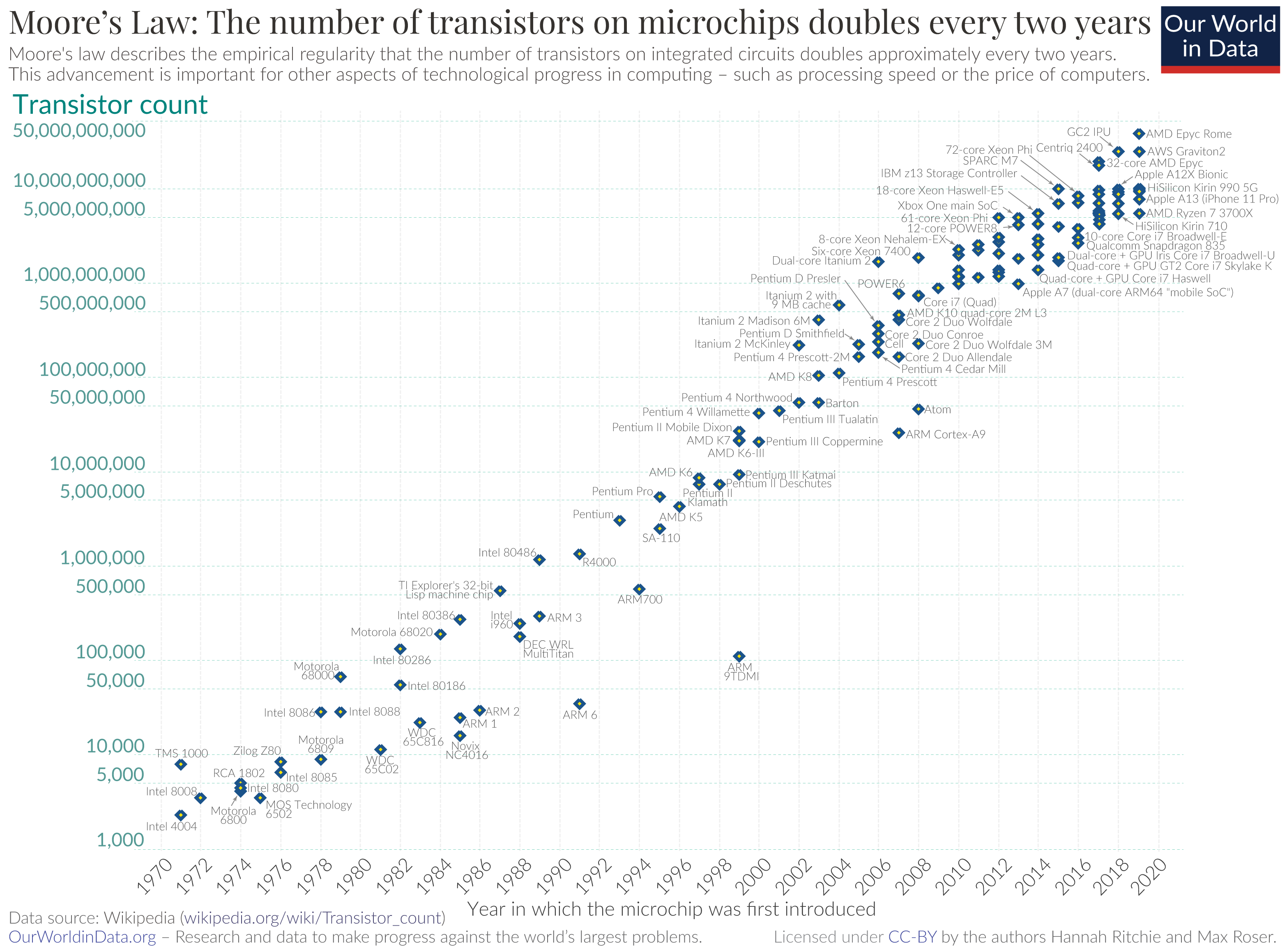
This action by 5VOLTCORE is of singular interest because it reveals, at the heart of the machine, a form of continuity between the digital and the analog, both inevitably sensitive to the physical conditioning of matter. In this sense, it calls into question the discourses that treat digital technologies as immaterial. This is notably the case of the tradition inherited from the famous exhibition Les immatériaux, curated by the philosopher Jean-François Lyotard at the Centre Pompidou in 1985, an event certainly linked to the notion of dematerialization, very compelling in the popular and academic imagination, and which continues to exert a certain influence today. For his part, Lev Manovich, author of one of the most influential essays on digital aesthetics2, conceptualizes what he calls “new media” as systems composed of two distinct layers3, abstracting from their materiality. He distinguishes, on the one hand, the cultural layer, which gathers socially recognizable categories (encyclopedia, short story, story, composition…), and, on the other hand, the computer layer, populated by operations and entities that he calls “informational” (process, data packet, function, variable…). These two layers interact and mutually determine each other. However, in light of 5VOLTCORE’s performances, Manovich’s schematization, though relevant4, seems incomplete, for it neglects the physical, active and determining base that underlies the functioning of the computer. Indeed, what Manovich perceives as the material level – “numerical representation” and “modularity5” – in fact corresponds to upper levels, far removed from the concrete functioning of the machine, where rectified analog electrical pulses (rectified so as to describe digital logic) traverse a highly complex interweaving of millions of microtransistors within integrated circuits6. Manovich illustrates his schema of the functioning of computers using the digital image7, which he apprehends, on the human side (cultural layer), in dialogue with other images. On the computer layer, however, the image is described as a machine-readable header followed by numbers indicating the color of the pixels. But the duo 5VOLTCORE produces images that escape this distinction: their creation cannot be isolated at the level of the computer layer, which seems to be short-circuited. These images are born directly of the electrical signal itself, surging from a deeper, more fundamental level than code8. They point to this material uprooting, which reveals the inadequacy of the schemas proposed by the first aesthetics of the digital.
Use vs. Functioning
One might object that this performance by 5VOLTCORE cannot shed light on the functioning of computers, insofar as the computer is mobilized here in ways that totally escape everyday use. Yet, if we are to believe Gilbert Simondon, it is precisely this solicitation outside of any use that allows the technical object to reveal its true face. As Jean-Hugues Barthélémy explains:
[…] instead of setting out to identify historical periods or “epochs” of TECHNICS, Simondon seeks above all to think TECHNIQUES in their diversity, and as offering what he calls “phylogenetic lineages.” It is therefore not in a global history of technics that Simondon will bring out meaning, but in particular evolutions of techniques defined as functionings, the consideration of which will, moreover, make it possible to combat the tendency to reduce technical objects to their use, which may well be called function but which is not functioning9.
The action of 5VOLTCORE thus stands as a radical example of an apprehension of the technical object that, outside of any use, underlines the gap between artistic intervention and the notion of labor, the latter understood by Simondon as a form of alienation responding to concerns external to technics itself and to its relation to the human. What manifests itself here is the expression of a particular form of attention, which Simondon associates with technical activity in its noblest conception:
Technical activity is distinguished from mere labor, and from alienating labor, in that technical activity involves not only the use of the machine, but also a certain coefficient of attention to technical functioning, maintenance, adjustment, improvement of the machine, which extends the activity of invention and construction10.
This approach, which seeks to go beyond the utility of the machine in order to grasp its mode of existence, distances these artists from the figure of the user and brings them closer to that of the mechanologist as proposed by Simondon11, in a dynamic opposed to technical specialization, from which follows a form of “narrowness of intentions, of ends12” denounced by the philosopher. The specialization of labor rests on prerogatives external to the intimate nature of the machine, introducing cognitive compartmentalizations liable to “create the mutual isolation of thought with respect to itself13.” Within this framework, the reconstructive action of what Simondon calls “aesthetic thought” contributes to the search for a form of “totality of thought14.” The intervention of 5VOLTCORE, though brutal, fully belongs to this dynamic.
Algorithm, a Broadened Definition
On another note, one might question the place of the algorithm in this performance by 5VOLTCORE. Indeed, the algorithm, understood as code, is not mobilized here, as has already been indicated in another way by asserting that the computer layer, as defined by Manovich, is short-circuited. Now – and this reflects a general attitude of this research – when it comes to understanding the algorithm as code, it is essential to adopt a broader view of the notion of algorithm, such as the one proposed by Ars industrialis15: “[…] the algorithm does not concern only computational processes, in the narrow sense of the word, since, to take a very simple example, looking up a word in the dictionary already pertains to an algorithm16.” Thus, in this work by 5VOLTCORE, the algorithm is not expressed on the level of coding, but through the procedures rigorously followed by the artists during the performance: from putting on body protection to extinguishing the computer’s burning “body,” turned to ashes, by way of activating the switches, using the electrodes and the multiplicity of connections between the source and the graphics card that give rise to the images produced.
This manifestation of the algorithm, and of algorithmic behavior, escapes both the everyday use of the term and its specialized use. It is indeed a broadened conception of the algorithm, without which it becomes difficult to grasp what code concretely does. Now, as we will see in chapter 3, within the framework of this research this is an action to be grasped, within the algorithmic creative process, in what we will propose as the protocol zone. This type of broadened definition resonates with media archaeology, a field of research that proposes to approach media within the framework of “broadened definitions and temporalities17,” capable of overcoming the epistemological compartmentalizations between tools and practices, often erected by discourses centered on phenomena of rupture.
URL: https://www.youtube.com/watch?v=mmI6DcW0OJE, accessed 19 October 2025.↩︎
Lev Manovich, The language of new media, op. cit.↩︎
Ibid., p.46.↩︎
It will be useful in clarifying certain aspects of the work Entwining of Lost Souls (2022) by Simon Le Boggit.↩︎
Lev Manovich, The language of new media, op. cit., p. 45.↩︎
In 2019, the most powerful processors, such as the AMD Epyc Rome, approached 50 billion transistors. Source: https://ourworldindata.org/uploads/2020/11/Transistor-Count-over-time.png↩︎
Lev Manovich, The language of new media, op. cit., p. 45.↩︎
In this respect, this work by 5VOLTCORE joins the radical propositions of Friedrich Kittler, who, seeking to emphasize the decisive importance of the material functioning of computers, proclaimed in 1993, in a polemical register: “There is no software.” See Friedrich A. Kittler, Mode protégé. Dijon Saint-Denis : les Presses du réel Labex Arts-H2H, 2015.↩︎
Jean-Hugues Barthélémy, «Simondon et la question des âges de la technique ». Appareil [en ligne]. June 2008.↩︎
Gilbert Simondon, Du mode d’existence des objets techniques, op. cit., p.339.↩︎
Ibid., p. 15.↩︎
Ibid., p. 14.↩︎
Ibid., p. 248↩︎
Ibid.↩︎
Association internationale pour une politique des technologies de l’esprit, a working and reflection group founded by Bernard Stiegler (1952-2020) in 2005. Website of the association: https://arsindustrialis.org/lassociation accessed 9 September 2022.↩︎
Vocabulary of the association internationale pour une politique industrielle des technologies de l’esprit, Ars industrialis, https://arsindustrialis.org/algorithme, accessed 30 January 2023.↩︎
Jussi Parikka, Qu’est-ce que l’archéologie des média ? Grenoble : UGA Editions - Univ. Grenoble-Alpes, 2018, prologue.↩︎
Cite this pageCórdoba, Pablo-Martín. “The Tortured Computer”. In Making Digital Images in the Light of Experimental Cinema — Anthropological and Political Resonances of Algorithms in Contemporary Art, Doctoral thesis in visual arts and photography, Université Paris 8 Vincennes-Saint-Denis, Doctoral School EDESTA (no. 159), research unit AIAC, 2026. https://www.pablomcordoba.com/thesis/the-tortured-computer/